


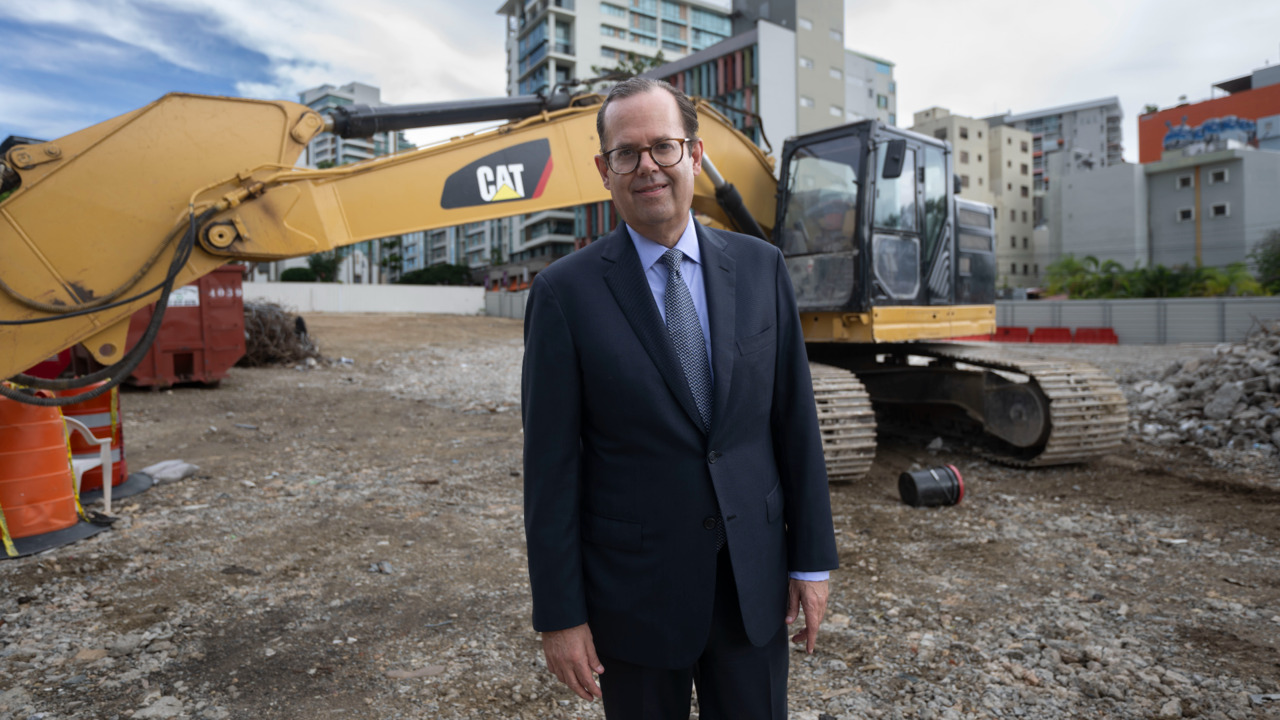
San Juan - The view from Nicholas (Nick) Prouty’s office is stunning.
Outside his window, a sprawling urban park surrounds his most iconic and successful investment in Puerto Rico to date, Ciudadela. Its lush greenery stands in stark contrast to the haphazard asphalt and gravel parking lot that once sat in its place.
When Prouty, the founder and CEO of Putnam Bridge, arrived in Puerto Rico in 2012, Ciudadela was a bankrupt mixed-use development. Despite its financial troubles, he saw a project with an impressive vision and impeccable location, surrounded by such irreplaceable assets as the Museum of Art of Puerto Rico, Luis A. Ferré Performing Arts Center, Pavía Hospital and FirstBank’s headquarters, alongside a burgeoning technology corridor on Ponce de León Avenue.
“In terms of the old ‘location, location, location’ adage, every conceivable box was checked at Ciudadela,” he said.
Today, Ciudadela is the epicenter of a vibrant, if still developing, urban revitalization that has breathed new life into several city blocks. It has drawn new businesses and restaurants and attracted other major investments, such as Red Ventures’ Puerto Rico headquarters and Abarca Health’s Oasis home office. It has also drawn criticism over rising property values and the resulting impact on longtime residents, along with accusations of gentrification, which Prouty rebuts.
“As someone who appreciates history, Santurce was front and center in the mind of [Operation Bootstrap architect] Teodoro Moscoso in terms of urban planning. It is not surprising that Ponce de León Avenue was the original master-planned shopping street, with department stores located here along with movie theaters and ice cream parlors…there was even a train. So, all those naysayers ought to study their history before throwing out terms such as gentrification,” he said.
Prouty was among the first investors to believe in Puerto Rico, moving to the island after being drawn by a tax regime designed to attract capital following the financial crisis. A journey that began as a single real estate project in one of the capital’s oldest communities has since evolved into a diversified portfolio spanning energy and agriculture.

From Santurce to Fajardo
Prouty’s next big bet on the island was the acquisition from the U.S. Bankruptcy Court of Marina Puerto del Rey, the largest marina in the Caribbean by slip count, located in the eastern municipality of Fajardo.
Despite having no previous experience running a marina, the Putnam team leaned heavily into the project, catching up on years of deferred capital expenditures, reengineering its corporate culture and improving energy efficiency through the construction of an on-property solar field that reduced electrical bills by 65%, all that while relying on the experience and expertise of “employees who are as smart and capable as anyone you might find at any other world-class marina anywhere in the world,” according to Prouty.
Marina Puerto del Rey was sold to Safe Harbor Marinas in 2021 for an undisclosed amount. Some estimates put the sale price at more than double what Putnam Bridge paid for the marina in 2013.
A patient-capital approach
The evidence from Prouty’s investments suggests that his strategy in Puerto Rico has increased the value of the once-distressed assets his company took over and turned around, while also contributing to activity in and around those properties.
During his time as a Individual Resident Investor under Act 60 (formerly Act 22), he has learned key lessons about how to be successful in Puerto Rico’s market. Chief among them, he says, is the need to have patient capital that can withstand political and environmental mood swings.
“If you are relying too heavily on debt, and do not understand the importance of cash flow, you could easily find yourself upside down,” he said.
He also harps on built-in resilience in the form of redundant power, potable water reserves and satellite-based communications as non-negotiables for success in a territory where government-provided utilities are highly unreliable.
On the human side, Prouty insists that adding value and exceeding customer expectations, investing heavily in people’s professional development and maintaining strong relationships are key elements of his success.
Investing in people
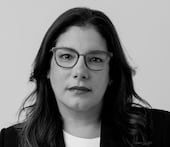
A protégé of his, Carolina Corral, is living proof of his commitment to these human-centered values.
She began working for the Proutys as a babysitter while she saved money after law school to move stateside. Prouty, who is as concerned as anyone about the persistent brain drain dilemma affecting the island, became curious about her motivations and suggested she go to work for his company instead. Over time and under Prouty’s mentorship, she grew within the company and eventually became general manager at Puerto del Rey.
Corral, who is now senior vice president for Southeast Operations at Safe Harbor, vouches for his vision and his humanity.
“I think he is the living example of what the law intended as an Individual Resident Investor, someone who doesn’t just come here to make money, but who revitalizes spaces and drives economic activity around those investments,” said Corral.
A resident of Ciudadela, Corral reaps the benefits of Prouty’s vision in her daily life as a member of a vibrant community where she can hit the gym next door in the morning and sit down for coffee at a locally owned coffee shop down the street.
“Beyond them making financial sense, he looks for projects that will have a positive impact on their ecosystems, even if that doesn’t directly benefit him,” she said.
Tackling problems beyond real estate
Other projects in Putnam Bridge’s portfolio, including La Casa and Putnam Solar, appear to follow this investment philosophy of addressing ongoing challenges.
In the case of La Casa, a residential development adjacent to Ciudadela designed and marketed for residents aged 55 and over, Prouty alludes to three seemingly disjointed issues that the project addresses: the younger-skewing demographic change spurred by Ciudadela, the abundance of abandoned but structurally sound buildings in the Santurce neighborhood, and the scarcity of organized housing stock for retirees in Puerto Rico, which drives migration to places like Florida.
“From these three seemingly unrelated conflicts, La Casa was born; 151 apartments and a 20-year waiting list to get into the building, which triggered La Casa II across the street, which represents another $300 million investment with an additional 225 apartments,” said Prouty.
Putnam Solar, for its part, addresses what Prouty recognizes as one of Puerto Rico’s most critical issues: energy production and distribution.
“Without comprehensive reform to the grid and electrical production, we will be plunged into darkness, as no company will relocate here without a robust and resilient source of electricity,” he said.
To be part of the solution, the company has invested nearly $350 million in renewable energy and battery storage in the southern town of Salinas, adding 90 megawatts of energy and an additional 90 megawatts of standalone battery storage that can be used by LUMA Energy—the island’s grid operator—to manage loads during peak hours.
An investor with skin in the game
Because he relocated to Puerto Rico with his family and spends most of his time on the island, Prouty has a firsthand understanding of the challenges and opportunities facing Puerto Rico.
“Investors want predictability, political stability, and the uninterrupted delivery of essential services. It really is that simple,” he said, while also acknowledging that the law must change to require decree holders to invest locally or resentment will continue to grow.
This resentment is something he is keenly aware but also weary of, as his data-driven analysis shows.
“How could 3,000 new investors displace a population of 3.2 million? It is statistically impossible and intellectually dishonest,” he said.
The next frontier: agriculture
Unfazed by naysayers, Prouty’s next investment frontier seeks to address yet another ongoing challenge for an island that imports roughly 85% of its food supply, according to a 2020 estimate of the Office of the Chief Economist of the U.S. Department of Agriculture.
Prouty told Puerto Rico Business Insights that his company has purchased farmland on the island and is currently evaluating its potential for agricultural development.
“We host a monthly farmers market at Ciudadela and we’ve gotten to know a number of small growers, so we’re learning a lot and trying to figure out if it might be scalable,” he said. “I’m really about Puerto Rico standing on its own feet.”
Perhaps the view from his proverbial window is about to get even greener.


