August 13, 2025 - 12:10 PM

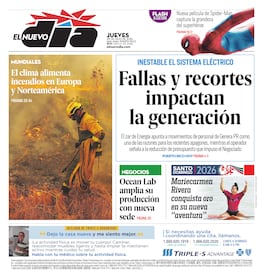
When presenting its plan to the Energy Bureau (NEPR) to address potential fuel emergencies—such as the one experienced last month—Genera PR placed much of its hope in the rehabilitation of a tank at the Palo Seco power plant (Toa Baja) that would substantially increase diesel storage capacity, but which may not be ready within the next two years.
---
Lee este artículo en español.
---
Genera PR, as it explained to the NEPR, does not yet have the necessary financing to complete the work on the tank and associated infrastructure, which includes the pipelines required to transfer fuel to and from the San Juan plant, the other main power generation facility in the northern region.
Once the Palo Seco “R-3” tank rehabilitation project is complete, Genera will be able to ‘consolidate’ diesel storage at that plant, as well as enjoy greater redundancy to ensure “operational continuity in the event of delays in (fuel) deliveries to San Juan, or the need to supplement fuel resources in San Juan in the event of a temporary displacement of natural gas.”
The NEPR’s requirement that a fuel contingency plan be submitted was a result of the crisis that unfolded in July amid contractual disputes over natural gas supplies between the government and New Fortress Energy, which, in addition to supplying fuel, is the parent company of Genera PR. Over several weeks, the operation of 14 temporary generation units was limited due to insufficient diesel, the fuel burned by the turbines in the absence of natural gas.
According to Genera, the R-3 tank, which previously stored bunker C—another petroleum derivative—could hold an additional 130,000 barrels of diesel. The tank rehabilitation work has already been completed, at a cost of just over $3 million, but approximately $15 million still needs to be identified to develop the capacity to move the fuel to the generation units in Palo Seco, as well as to transport the diesel to the San Juan power plant.
Both power plants are already interconnected by pipeline systems—mainly underground—that allow for the transfer of bunker C and diesel fuel.
“The design for transferring fuel between the Palo Seco tanks and connecting to the existing infrastructure to transfer fuel to the San Juan plant has been completed. However, the necessary budget is not available,” Genera spokesperson Iván Báez told El Nuevo Día.

That phase could be completed within 18 to 24 months after the funds are approved, the company official said in writing, noting that a budget request to the NEPR for the current fiscal year was denied.
According to Genera, there is conditional approval to allocate $13 million from the State Clean Water Revolving Fund to the interconnection project, but “at this time, no disbursement has been made.”
Of the 14 emergency units acquired in 2023, four are located in Palo Seco and 10 in San Juan. At the San Juan plant, combined cycle units #5 and #6 also use diesel as an alternative fuel.
As part of its motion to the NEPR, Genera stated that it had meetings with personnel from the Puerto Rico Electric Power Authority (PREPA), to which the regulator had originally requested the contingency plan. However, the private operator did not accept PREPA’s proposal.
“PREPA acknowledges Genera’s response and emphasizes that, under the Generation OMA (operation and maintenance contract), Genera is the entity contractually responsible for managing PREPA’s legacy generation assets, including fuel supply operations. Furthermore, Genera currently possesses the specialized expertise and operational control necessary to develop and implement a fuel security strategy aligned with its operations,” the public corporation stated in a separate motion to the NEPR.
---
This content was translated from Spanish to English using artificial intelligence and was reviewed by an editor before being published.
Las noticias explicadas de forma sencilla y directa para entender lo más importante del día.

Te invitamos a descargar cualquiera de estos navegadores para ver nuestras noticias: